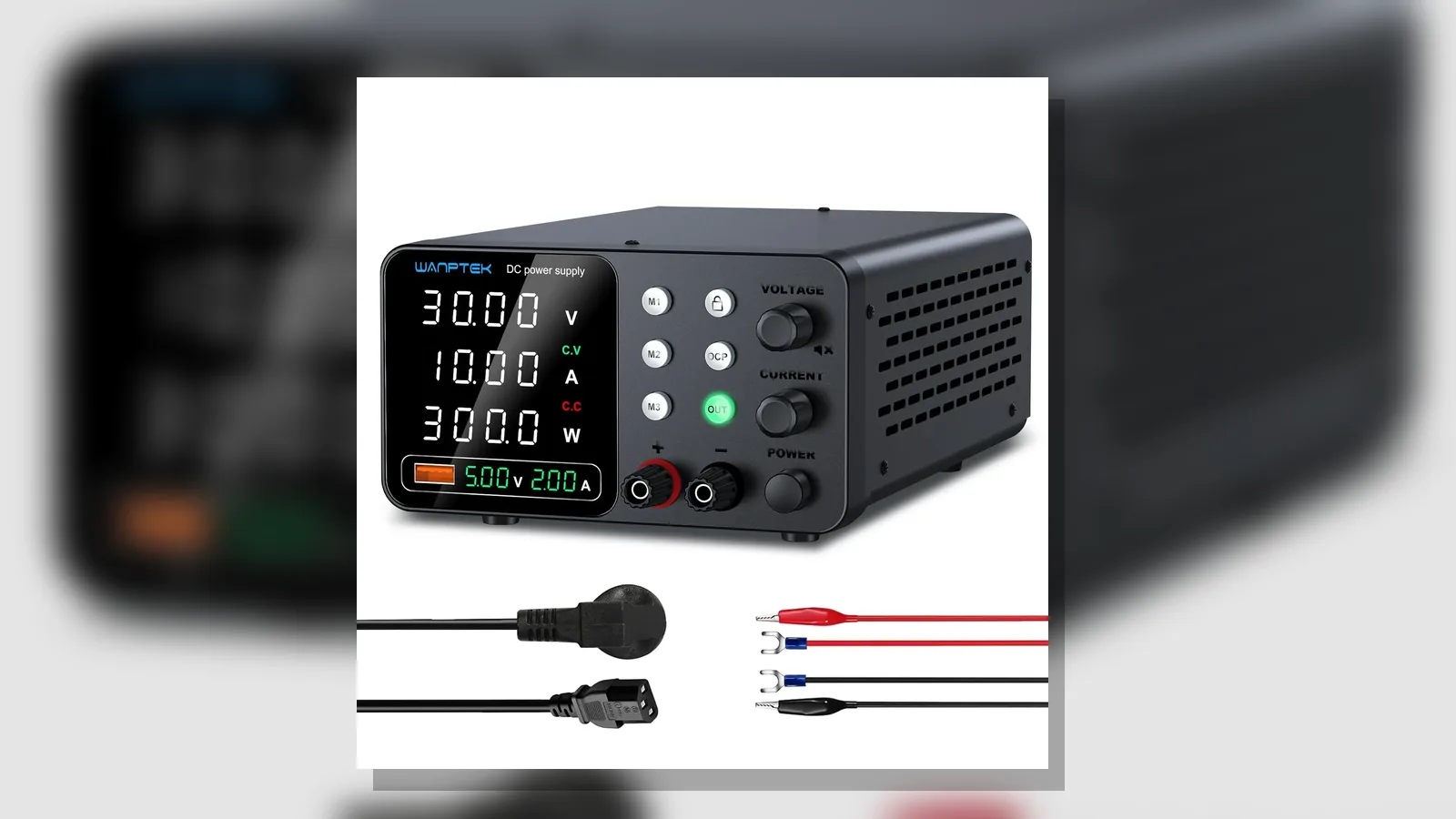
how to choose voltage and current range bench power supply
To choose the voltage and current range of a bench power supply, start from your device-under-test (DUT) operating envelope—normal, peak and start-up needs—then confirm that the supply can deliver those volts and amps together within its power limit, with sensible headroom and separate checks for channels, noise, measurement and safety. Do not buy on the largest headline numbers alone.
Direct answer: start with the device-under-test envelope, not the largest headline numbers
Headline maxima are easy to compare and easy to misread. A useful range decision begins with what the DUT must see in steady use, during peaks and at start-up, then asks whether a candidate supply can sit inside that envelope without forcing you into awkward corners of its rating chart.
As Tektronix notes in its guidance on linear supply specifications, selection depends on understanding voltage, current, power, regulation, ripple and channel details together rather than treating one printed figure as the whole answer. Match the supply to the job; do not assume a bigger front-panel number is automatically safer or more capable for your circuit.
List normal, maximum and start-up voltage and current needs
Write three rows for voltage and three for current before you open any product page:
- Normal — the values you expect in ordinary operation.
- Maximum — the highest continuous values the DUT may require in your test plan.
- Start-up — short-lived inrush or bias conditions that may exceed the normal row.
Keep units consistent and note whether limits are DUT requirements or supply settings. A higher current rating on a supply does not force extra current into a correctly connected load; current capability is an available limit, not an automatic push into the circuit. Set voltage and current limits deliberately for the test, and treat battery charging, high-energy loads and mains-connected DUTs as specialised work outside this buying guide.
Calculate power and check whether volts and amps are available together
Power is not always “maximum volts multiplied by maximum amps”. Rohde & Schwarz explains that maximum voltage, current and power form an operating envelope, and that maximum power is often below that simple product. After you list V and I needs, calculate the power those combinations imply and check whether the supply can deliver them at the same time.
If your worksheet asks for a high voltage at a high current, confirm that point sits inside the published envelope rather than assuming both maxima are available together. Where a live product page shows derating or an operating region, compare your worksheet points against that region—use confirmed details numbers for a shop unit from labels or procurement notes.
Allow practical headroom without losing useful control
Modest headroom above normal operation helps absorb measurement uncertainty, cable drop and small plan changes. Excessive headroom can make fine adjustment harder if the useful control range for your DUT sits in a small portion of a very wide setting.
Prefer headroom that keeps your normal and maximum points comfortably inside the envelope while leaving enough resolution for the voltages and currents you actually set. Revisit headroom after you know whether the candidate is fixed-range or autoranging, because those architectures place the same V/I needs in different parts of the available region.
Compare fixed-range and autoranging operating envelopes
Fixed-range supplies typically publish clear voltage and current ceilings that apply together within a stated power story. Autoranging designs can offer a wider set of V/I combinations inside a power limit, so the “best” range for your DUT may depend on where your worksheet points fall on the envelope, not only on the largest V or I printed on the front.
When you compare options, plot or tabulate your normal, maximum and start-up points against each envelope. Ask whether you need high voltage at modest current, high current at modest voltage, or both at once—and confirm the live specification sheet supports that region.
Check channel count, noise, measurement accuracy and safety needs separately
Range sizing answers only part of the purchase. Channel count, output noise and ripple, metering accuracy, protection features and how you will run the test method belong on a separate checklist so a strong V/I fit is not undone by the wrong architecture for the job.
The Health and Safety Executive (HSE) requires electrical-test risks to be controlled; equipment selection must support a safe test method rather than resting on a specification-only decision. Plan leads, limiting, isolation expectations and competent working practices alongside the numbers on the range sheet.
Buyer worksheet, who should not overbuy and FAQ
Buyer worksheet
- Normal / maximum / start-up voltage for each rail you will power.
- Normal / maximum / start-up current for each rail.
- Power implied by each V×I combination you will actually use.
- Whether those points must be available together on one channel or across channels.
- Headroom you need without making fine control impractical.
- Fixed-range versus autoranging fit for those points.
- Separate notes for channels, noise, metering and the safe test method.
- Compare the completed worksheet with the current product details on the live page—do not assume unpublished range figures.
Who should not overbuy
If your DUT envelope is modest and stable, a supply sized for rare peaks you will never run can waste money and make everyday adjustment coarser than necessary. Overbuying on headline current or voltage is also a poor substitute for a written test method when the real risks involve batteries, high stored energy or mains-referenced work.
FAQ
Can I decide from the largest voltage and current printed on a supply?
No. Those figures may not be available together, and they ignore start-up behaviour, channels, noise, metering and safety method.
Does a higher current rating push more current into my board?
No. The supply’s current rating is a capability limit. With a correct connection, current depends on the load and on the limits you set; treat limiting as part of a deliberate, safe procedure.
What warranty can be stated here?
A 12-month warranty is confirmed for the shop offer and may be noted separately from technical suitability. Warranty length does not prove that a given voltage or current range fits your DUT—confirm range on the live product page.
Next step
Complete the worksheet, then review the current product details and match your envelope to the published operating region before you buy.